
My account
Carte
© 2026 Aftonia – Tous les droits sont réservés.




My account
Carte
No products in the cart.
© 2026 Aftonia – Tous les droits sont réservés.
My account
Carte
No products in the cart.
© 2026 Aftonia – Tous les droits sont réservés.
Devenir revendeur
Mon compte
Carte
No products in the cart.
© 2026 Aftonia – Tous les droits sont réservés.
My account
Carte
No products in the cart.
© 2026 Aftonia – Tous les droits sont réservés.
My account
Carte
No products in the cart.
© 2026 Aftonia – All rights reserved
How are hand-crocheted raffia bags made?
19/08/2026
Behind every hand-crocheted raffia bag lies meticulous work, precise craftsmanship and expertise passed down from generation to generation.
At Aftonia, every creation is much more than just an accessory: it is the result of a craft process where every detail counts.
Raffia, a natural material emblematic of Madagascar, comes to life in the expert hands of the artisans to become unique, elegant and durable bags.
But how are they actually made?
1. Selecting raffia: the foundation of everything
It all starts with the raw material.
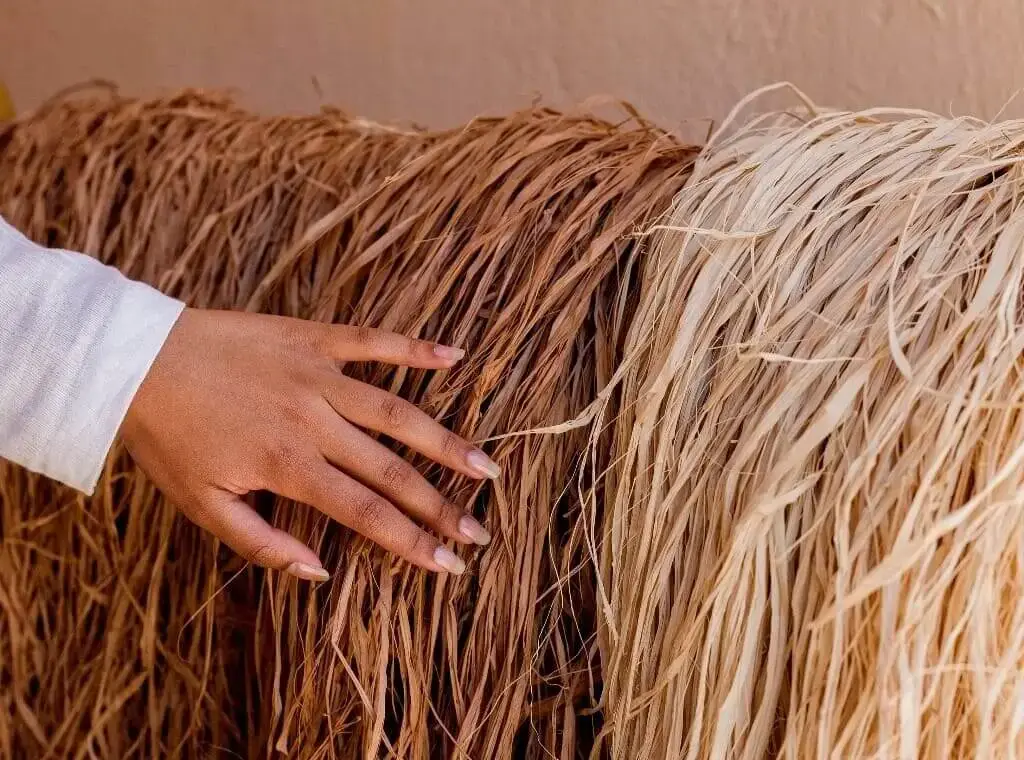
Madagascar raffia comes from the leaves of the raffia palm, a natural fibre renowned for its suppleness, strength and lightness.
Before being processed, the raffia is carefully selected according to several criteria:
- the fineness of the fibres,
- their suppleness,
- their uniformity,
- their strength.
This stage is essential, as the quality of the raffia directly influences the bag’s durability and finish.
At Aftonia, we prioritise high-quality natural raffia, capable of ensuring long-lasting creations.
2. Preparing the fibres
Once harvested, the raffia undergoes a preparation process.
- The fibres are:
- cleaned,
- dried,
- sorted,
- and sometimes dyed, depending on the design requirements.
This preparation process results in a uniform material, ready to be worked with a crochet hook.
It is also at this stage that the bag’s final texture is determined.
3. Hand crocheting: the key stage
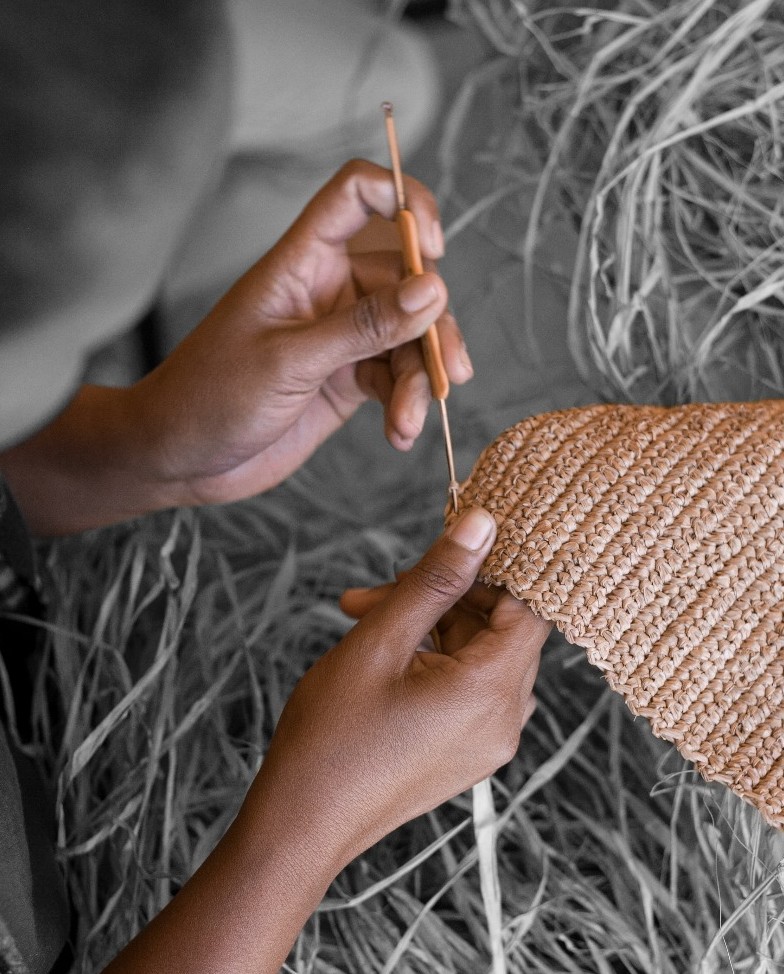
The heart of the process lies in hand crocheting.
This is where the craftsman brings the bag to life.
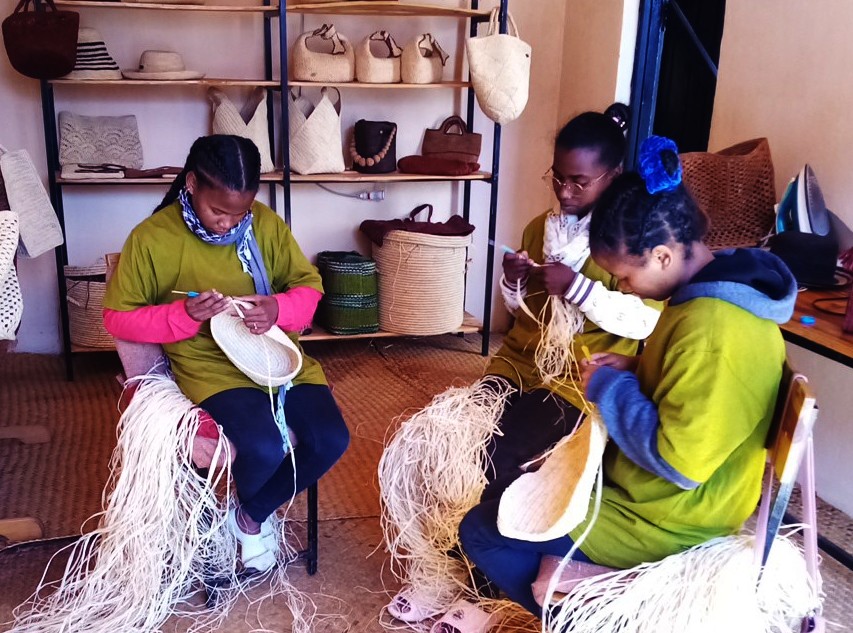
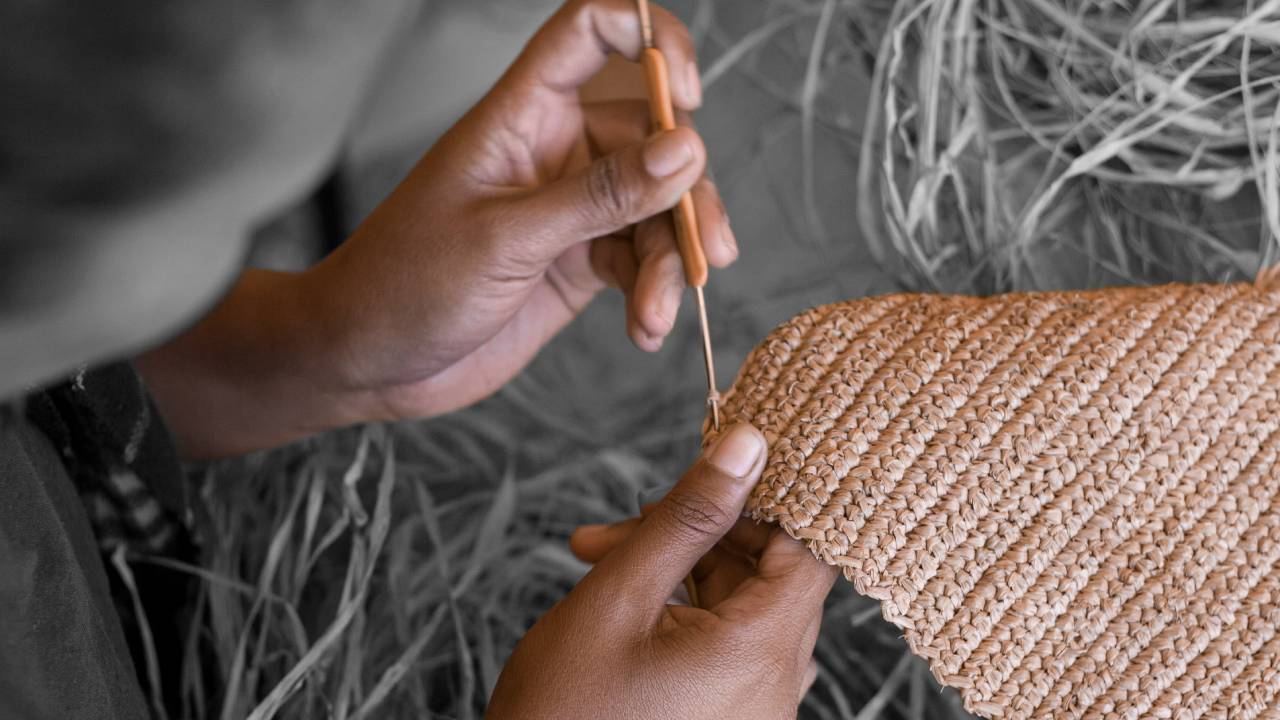
Using a crochet hook, he assembles the fibres one by one using a precise technique.Each stitch is made by hand with meticulous care and consistency.
This stage requires:
- patience,
- concentration,
- precision,
- experience.
Depending on the size and complexity of the design, making a bag can take several hours, or even several days.
It is this meticulous work that makes each piece unique.
4. Shaping the bag
Crochet is not just about joining fibres together.
The craftsman must also construct the bag’s structure:
- the base,
- the sides,
- the handles,
- the shoulder straps.
Each part is designed to ensure:
- sturdiness,
- comfort in use,
- aesthetic appeal.
The proportions, shapes and finishes vary depending on the style: tote bags, shoulder bags, clutches or handbags.
5. The finishing touches: the detail that makes all the difference
Once the structure is complete, it’s time for the finishing touches.
This is often what sets a high-quality handcrafted bag apart.
The craftspeople check:
- the evenness of the stitches,
- the strength of the fastenings,
- the balance of the shape,
- the neatness of the weaving.
Some designs may include:
- inner linings,
- fastenings,
- decorative details,
- reinforced handles.
At Aftonia, this stage is essential to ensure an elegant and durable piece.
Why is a crocheted raffia bag unique?
Unlike a mass-produced item, a handmade raffia bag bears the marks of human craftsmanship.
Every stitch, every tension and every finish reflects the artisan’s work.
This means that no two bags will ever be exactly the same.
It is precisely this uniqueness that gives them their value.
A crocheted raffia bag is:
- an authentic creation,
- a natural material,
- artisanal craftsmanship,
- a durable piece.
Aftonia: the art of transforming raffia into elegance
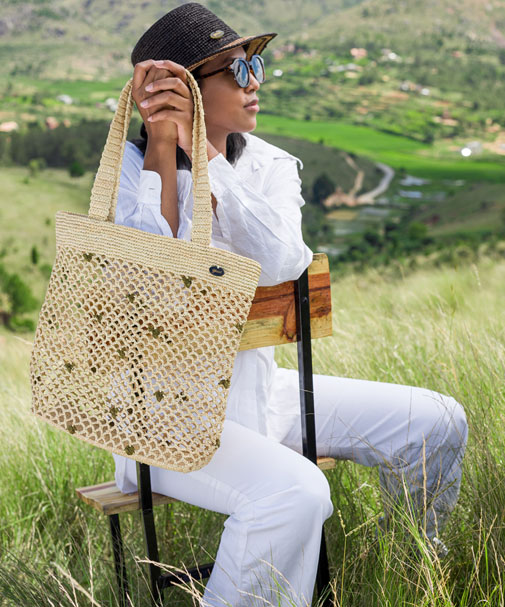
At Aftonia, we have chosen to showcase this Madagascan craftsmanship by creating bags that blend tradition and modernity.
Each design is crafted with the same commitment:to respect the material, honour the work of the artisans and offer unique creations.
Because a hand-crocheted raffia bag is not just an accessory.
It is a story woven stitch by stitch.
Partager :
Share on facebook
Share on twitter
Share on linkedin

AFTONIA
Author
Recent articles
Follow us
Articles Similaires
05/08/2026
The story of Aftonia: between tradition and modernity
In Madagascar, craftsmanship is much more than just a trade.…
15/07/2026
Why Does Aftonia Choose Authentic Malagasy Craftsmanship?
At a time when mass production dominates the market, Aftonia…
15/07/2026
Aftonia’s story: why did we choose Madagascar raffia?
In a world where fashion evolves rapidly and consumption often…